
Orders / hour
142
+18 vs target
6 capabilities · timeline spine
What does the AI optimisation layer actually do for the warehouse?
Six tuned capabilities along the order lifecycle · from inbound dock to picker confirmation. Each one is independently switchable.
Capability · 01
AI pick-path routing
Multi-stop TSP-style with constraints · bulk first, fragile last, cold-chain time windows.
Capability · 02
AI slotting
Velocity-aware · fastest movers near outbound, paired SKUs adjacent, weight-balanced for ergonomics.
Capability · 03
Demand forecasting + replenishment
Per-SKU · per-DC · auto-reorder triggers 5 to 9 days before the static rule fires.
Capability · 04
Space utilisation + cube fill
Rack-density heatmaps · dead-stock identification · cube-fill optimisation for inbound putaway.
Capability · 05
Receiving + putaway optimisation
AI suggests storage location on inbound based on velocity rank and paired-SKU adjacency.
Capability · 06
Mobile picker app · barcode + voice + route
EN, BM and 简体中文 · barcode scan, voice prompts, optimal-route guidance, offline-tolerant.
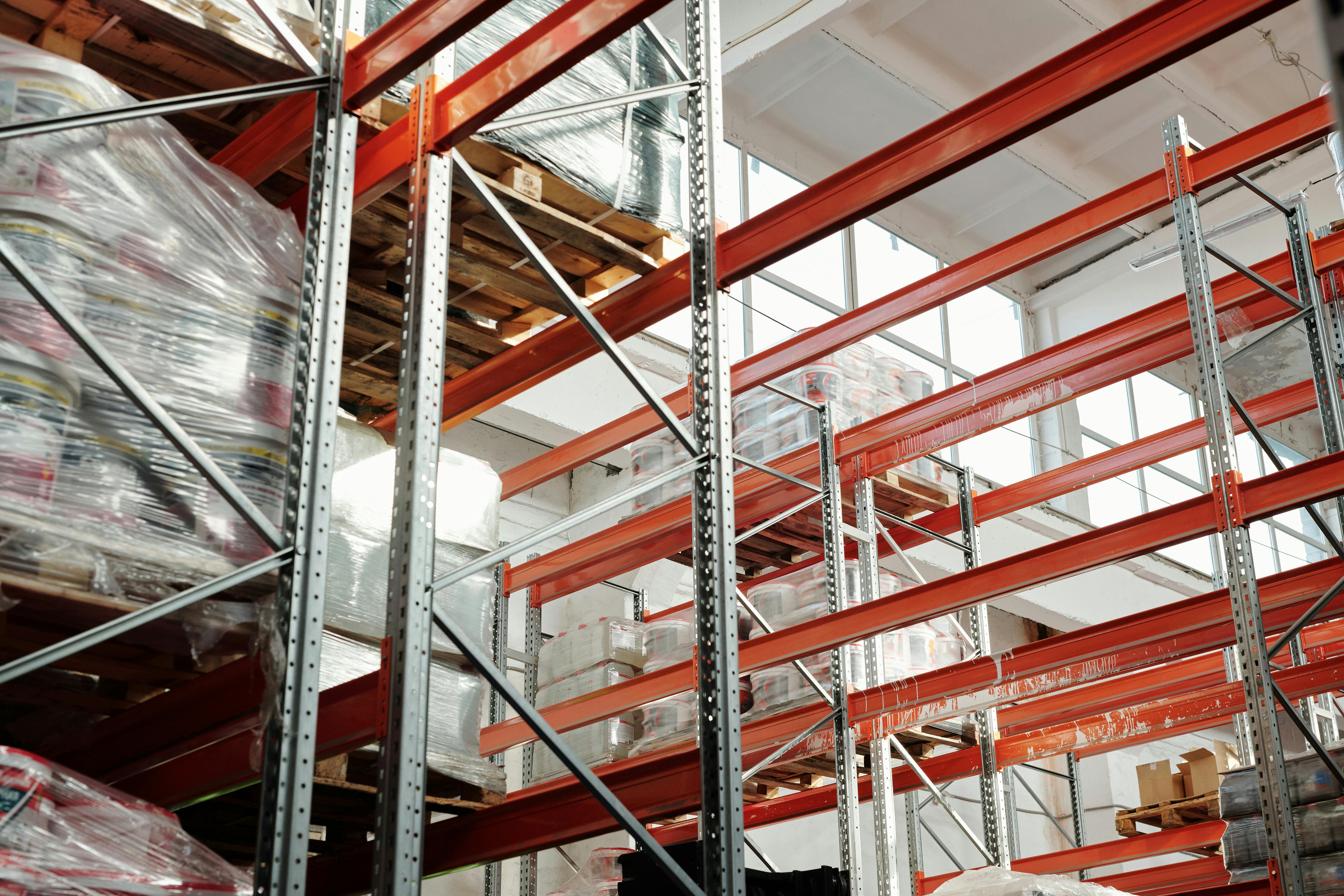
AI pick-path routing
Multi-stop, multi-constraint routing that solves what humans cannot.
A pick list with 18 stops has 6.4 quadrillion possible routes. Your picker is choosing one of them in their head while their handheld beeps. AI pick-path routing solves the optimal sequence in milliseconds with the constraints that actually matter on a Malaysian DC floor · bulk first so fragile items go on top, cold-chain time windows respected, hazardous SKUs picked last, and the picker is guided turn-by-turn through their handheld.
- Solves multi-stop TSP with 6 constraint classes · sub-200 ms per pick list
- Bulk-first · fragile-last · cold-chain windowed · hazardous quarantine
- Adapts to live aisle blockages flagged by other pickers in the same shift
- Walk-time falls 30 to 40% on day one · picks-per-hour rises 28 to 38%
Real-time KPI dashboard
What lives on the warehouse manager's screen all day?
Five live numbers that decide whether tonight's overtime is needed · refreshed every 30 seconds, mounted on the wall in the supervisor's office.
Walk-time / order
2:18
−38% vs baseline
Pick accuracy
99.6%
4 errors / 1k
Dock-to-stock
18 min
inbound to put-away
Cube fill
78%
rack capacity used
Wall-mounted control screen. Refreshed every 30 seconds, projected on the supervisor's office wall, exported to Power BI for the operations director and the CFO.
Integration · sits on top
Where does AI-Powered WMS sit in our stack · do we have to replace D365?
No replacement. AI-Powered WMS is an optimisation layer. It reads from your ERP and existing WMS, writes back optimised pick lists and replenishment triggers, and talks to mobile devices, sorters and 3PL portals.
node · 01
ERP · existing
D365 · AutoCount · SAP · custom
node · 02
AI WMS layer
Pick path · slotting · forecast · KPIs
node · 03
Mobile picker app
Android handheld · ring scanner
node · 04
Conveyor · sorter PLCs
Modbus · OPC-UA · HTTP
node · 05
3PL portals · couriers
Lazada · Shopee · DHL · Pos Laju
6 to 8 week pilot · freight-receipt rollout
How long until AI-Powered WMS is live in our DC · what does the rollout look like?
Four steps from first site walk to live picking · stamped, signed off, ready for the next zone.
Received · 2026-W19
Step · 01
01
Week 1
Site walk
Daxonet walks your DC with the operations manager · maps existing WMS, ERP, racks and aisles, lists peak-day pain points. Output is a numbered zone plan and the pilot SKU list.
Signed
Received · 2026-W20
Step · 02
02
Week 2-3
Slotting analysis
90 days of pick history is loaded. Velocity ranking, paired-SKU adjacency and ergonomics overlay are computed. The relocation work order for the night shift is generated and reviewed with your team.
Signed
Received · 2026-W22
Step · 03
03
Week 4-6
Pilot 1 zone
Edge box installed. Mobile picker app rolled out to the pilot team. AI pick paths run side by side with the old method for the first 5 shifts, then take over. KPIs streamed to the wall display.
Signed
Received · 2026-W26
Step · 04
04
Week 7+
Plant rollout
Remaining zones enabled in waves. Each wave includes a bilingual picker training session in EN, BM and 简体中文. Forecasting and replenishment triggers go live once 8 weeks of clean order data exist.
Signed
FAQ · ops directors ask
Common questions before booking the warehouse walkthrough.
01Does AI-Powered WMS replace our existing WMS or our ERP?
No. AI-Powered WMS is an optimisation layer, not a replacement. It reads orders, SKUs, locations and stock from your existing WMS, ERP or even an Excel master file via API or scheduled file drop. It writes back optimised pick lists, suggested slotting moves and replenishment triggers. If you are running Microsoft Dynamics 365, AutoCount, SAP or a custom in-house WMS, all of those stay exactly where they are. Daxonet builds the connectors during the pilot and signs them off with your IT team.
02What hardware do my pickers need · do we have to buy new scanners?
The mobile picker app runs on any modern Android handheld with a camera, including the rugged Zebra and Honeywell scanners most Malaysian DCs already own. A standard mid-range Android phone in a rugged case also works for lighter operations. The app uses the device camera for barcode scan or talks to a Bluetooth ring scanner if your pickers prefer hands-free. No proprietary hardware is required. Daxonet sizes the device fleet during the walkthrough and quotes any top-up needed.
03How accurate is the demand forecast for SKUs with seasonal or promotional spikes?
The forecasting model blends 24 months of your real sales history with public seasonality signals (Hari Raya, CNY, Lazada and Shopee mega-sale dates, school terms, monsoon season). Mean absolute percentage error is typically 8 to 14% on stable SKUs and 18 to 24% on promotional SKUs · materially better than a static reorder-point. The model retrains weekly. For one-off product launches with no history, the system flags the SKU and lets your buyer set a manual safety stock until enough data accumulates.
04Does inference run on the cloud or on-premises · what about PDPA?
Inference runs on a small edge box on your premises for the latency-sensitive path optimisation and slotting recommendations. The forecasting model trains in the Singapore region. Customer names, addresses and PII never leave the edge · only SKU codes, quantities and aggregated demand signals stream to the cloud for forecasting. Role-based access, audit logs and 7-year retention are built in. Daxonet documents the data-flow diagram for your PDPA officer before sign-off.
05What languages does the mobile picker app support?
English, Bahasa Melayu and 简体中文 are shipped by default. The picker selects their language at login and the app remembers it per device. Pick instructions, error messages, voice prompts and the aisle-and-bin labels can all be localised. For multi-shift DCs where pickers rotate across nationalities, the app supports per-user language so a Bangladeshi picker on the night shift sees English while a Malaysian picker on the day shift sees Bahasa Melayu, on the same handheld.
06How does AI-Powered WMS connect to D365, AutoCount, SAP or our custom ERP?
Through API, scheduled file drop or message queue, depending on what your ERP supports. For D365 Supply Chain Management and Business Central, Daxonet uses the standard inventory and sales-order APIs. For AutoCount, we use the AutoCount API plus a small middleware service that handles the on-premise tunnel. For SAP, we use IDoc or BAPI. For a custom or legacy ERP, Daxonet builds a connector during the pilot · most take 1 to 2 weeks. The integration is read-mostly with optional write-back of slotting moves and replenishment POs after your supervisor approves them.
07How long until AI-Powered WMS is live in our DC · what does rollout look like?
The pilot is 6 to 8 weeks for one zone or one product family: data plumbing in weeks 1 to 2, slotting analysis and pick-path tuning in weeks 3 to 5, supervised live picking in weeks 6 to 8 with side-by-side comparison against the old method. Plant-wide rollout takes a further 6 to 10 weeks depending on zone count and SKU complexity. Each wave includes a bilingual picker-team training session in EN, BM and 简体中文 plus a sign-off with your operations manager.
08What does pricing look like · per warehouse or per order?
Pricing is scoped to your size, modules and integrations. Daxonet quotes fixed-price after a short scoping call so there are no surprises. Most clients reach payback within the same project window.
Related on Daxonet