LHDN e-Invoice Phase 4 is LIVE — All Malaysian businesses must comply. Check your compliance →
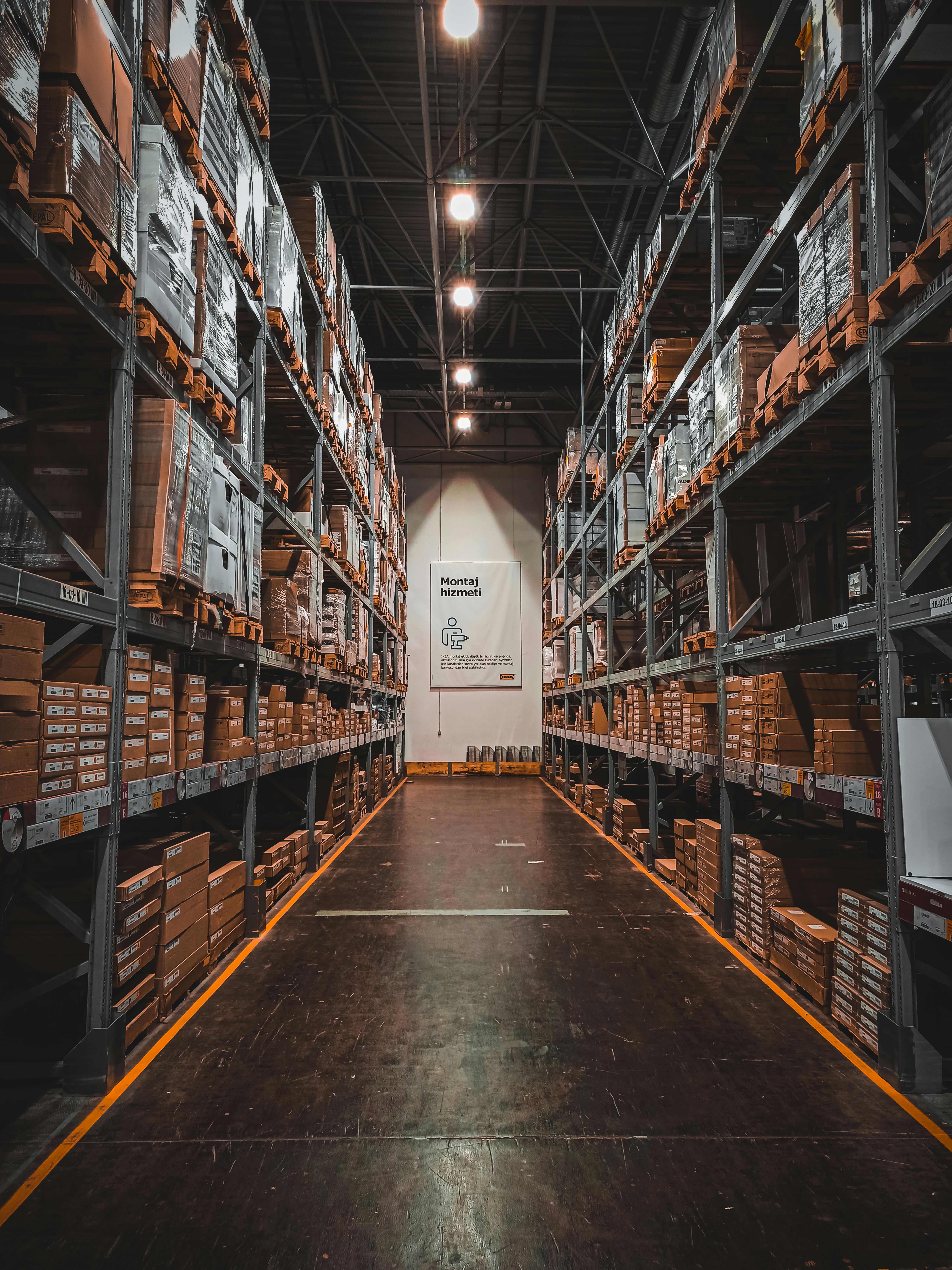
Distribution warehouse with racking, forklifts, and pick operations
Industries · Wholesale & Distribution

Wholesale & Distribution in Malaysia: ERP that protects every percent of margin.

Distribution runs on thin margins and high SKU velocity. One stockout costs a customer; one overstock kills cash flow; one bad invoice triggers a MyInvois rejection. Daxonet implements D365, Business Central, or AutoCount for trading houses, importers, distributors, and FMCG wholesalers across Malaysia — with mobile sales, multi-warehouse visibility, demand forecasting, and AI-powered WMS bolted on when volume justifies it.

Daxonet implements ERP and warehouse-management systems for wholesalers, distributors, importers, and trading houses across Malaysia. The stack scales from AutoCount Accounting + OneSales mobile for SME traders (RM 1-50M revenue) to D365 Business Central or D365 Finance + SCM for mid-large distributors (RM 50M+). AI-powered WMS adds pick-path optimisation, demand forecasting, and space-utilisation analytics for high-throughput operations. Standard delivery includes multi-warehouse stock visibility, mobile sales-force automation, dynamic pricing matrices, customer credit-limit controls, and MyInvois e-Invoice compliance with bulk B2B credit-note handling.

The Reality

Three problems that quietly destroy distribution margin in Malaysia.

Distribution is a percentage-points business. A 2% leak in any of these is a margin disaster.

Stock count never matches reality.

System says 240 cartons. Floor count says 187. Customer ordered 200 — you ship 187 and apologise. Repeat 30 times a month. Customers stop ordering.

Sales runs on WhatsApp, accounting runs on yesterday.

Reps message orders. Office keys them in next morning. Stock allocation is yesterday's. Half the orders need rework, the other half stockout-fail at picking time.

Dead stock is funding nothing.

8-15% of your inventory cash is in SKUs that have not moved in 12 months. You don't see them in the standard reports. Cash is trapped, working capital tightens, growth stalls.

The Stack

Sized to your operation. Configured for thin-margin reality.

Distribution doesn't need over-engineered ERP. It needs the right tool, configured to handle real-world stock, real-world pricing, real-world MyInvois.

SME trading & distribution

AutoCount Accounting + OneSales. Multi-warehouse, mobile sales, customer credit, e-Invoice ready. Strong Malaysian compliance, low TCO.

RM 1-50M revenue, 1-3 warehouses, <1,000 active SKUs.

Mid-market distributor

D365 Business Central. Multi-entity, multi-currency, advanced inventory, native Power BI, Copilot AI. Cloud-first.

RM 50-300M revenue, 3+ warehouses, multi-entity groups.

Enterprise distribution

D365 Finance + SCM + AI WMS. Advanced WMS, transportation, demand forecasting with AI, full traceability. Industry 4.0-ready.

RM 300M+ revenue, 5+ warehouses, complex pricing tiers.

Methodology · 4 phases

How does a distribution implementation actually run?

Stock discipline first. Sales velocity second. Margin intelligence third. The order matters — it is the order of who notices the change.

  1. 01

    Inventory Audit

    Stock-take reset. Barcode standards. Warehouse zone mapping. Item master cleanup. Foundation work — boring but mandatory.

  2. 02

    Configure & Mobilise

    ERP go-live with handheld scanning. Mobile sales (OneSales / D365 Sales). Pricing matrices. Credit limits. e-Invoice live.

  3. 03

    Operate & Refine

    Daily exception reports — short ships, stockouts, aged stock, credit holds. Operations management gets sharper week by week.

  4. 04

    Scale Intelligence

    Power BI dashboards. AI WMS for pick-path. Demand forecasting. Slow-mover liquidation programmes. Margin defence on autopilot.

Outcomes

What distributors actually ship after Daxonet engages.

97%+

Stock accuracy

From 75-85% pre-implementation. Barcode discipline does most of the work.

8-15%

Working capital freed

From slow-mover liquidation surfaced by aged-stock reporting.

2 hrs → 20 min

Order-to-pick time

Mobile sales eliminates rekey + AI pick-path optimisation cuts in-warehouse travel.

< 2%

MyInvois rejection

Versus 10-15% on manual or generic e-Invoice setups.

2-3x

Sales-rep productivity

More customer visits per week. No back-office data entry. Real-time stock confidence.

3-6 mo

Typical SME go-live

AutoCount + OneSales path. D365 BC: 6-9 months. D365 F&O + WMS: 9-15 months.

FAQ

What do clients ask before commissioning this service?

We have 3 warehouses and stock counts never agree. How does ERP fix that?
It does not — until barcode scanning is enforced at receiving, putaway, picking, and dispatch. Most stock variance in Malaysian distribution is created by paper-based moves that get keyed in days later. Daxonet implements barcode discipline as part of every WMS go-live: handheld terminals at the receiving dock, pick-confirmation scans, and exception alerts the moment system stock disagrees with the floor. Stock accuracy moves from 75-85% to 97%+ within the first quarter.
Our sales reps key orders into WhatsApp at night. Can we do better?
AutoCount OneSales — a mobile sales app that connects directly to AutoCount Accounting. Reps see real-time stock and pricing on their phone, capture quotes and orders in the field, and the order is in the system before they leave the customer's office. Eliminates double-entry and the 'oh, that SKU is actually out of stock' embarrassment after the customer says yes.
We do bulk B2B with credit terms. How does e-Invoice work for that?
Daxonet's e-Invoice middleware handles MyInvois submission for AutoCount, D365, and other systems. Credit-note handling (returns, quality claims, volume discounts) and self-billed invoices (where your customer issues the invoice on your behalf — common in commodity B2B) are configured during go-live so they validate against MyInvois rules before submission. Result: <2% rejection rate, versus the 10-15% common with manual or generic submission.
When do we need WMS versus just ERP inventory?
Rule of thumb: under 1,000 SKUs and 2 warehouses, ERP inventory alone is fine. Above that, or once putaway and picking errors start eating margin, WMS pays back inside a year. AI-powered WMS adds another layer — pick-path optimisation, demand-driven slot positioning, and aged-stock alerts. Most distributors add it in year 2-3 once base operations are clean.
How do you handle dynamic pricing — different prices for different customer tiers?
Pricing is scoped to your size, modules and integrations. Daxonet quotes fixed-price after a short scoping call so there are no surprises. Most clients reach payback within the same project window.
We import from China and pay in USD. Will the ERP handle FX?
Multi-currency is standard in D365 and AutoCount Accounting. Purchase orders in supplier currency, payable in USD, customer invoicing in MYR, with FX revaluation at month-end posting realised and unrealised gains automatically. Daxonet configures the rate sources (BNM official, internal hedge rate, contract rate) so the accounting matches treasury reality.
Our top 20 SKUs are 80% of revenue. The bottom 1,000 SKUs are dead capital. Can ERP help?
Yes — but only with the right reports. Standard ERP reports do not surface dead stock automatically. Daxonet builds an aged-stock and slow-mover dashboard (typically in Power BI on top of the ERP) that flags any SKU below a configurable velocity threshold, with last-sold date, on-hand quantity, and tied-up cash. Most distributors find 8-15% of inventory cash sitting in stock that hasn't moved in 12 months. Liquidating it funds the next category launch.
Ready to start?

Book a 45-minute briefing with a Daxonet principal.

We review your current state, map a phased path to your target outcome, and tell you honestly whether we are the right partner — or who is.

Hi! What can I do for you?
DAX AI Assistant · Online now