LHDN e-Invoice Phase 4 is LIVE — All Malaysian businesses must comply. Check your compliance →
Industries · Food & Beverages

Food & Beverage in Malaysia: from central kitchen to checkout, in one stack.

Food and beverage businesses in Malaysia run two operations at once — a manufacturing or central-kitchen operation that has to be HALAL-certified and MyInvois-compliant, and a customer-facing operation (outlets, e-commerce, distributors) that lives or dies on price-per-portion and customer loyalty. Daxonet implements the full stack: AutoCount or D365 in the back, POS at the counter, ARC.LITE on the production floor, OneRewards in the customer's hand.

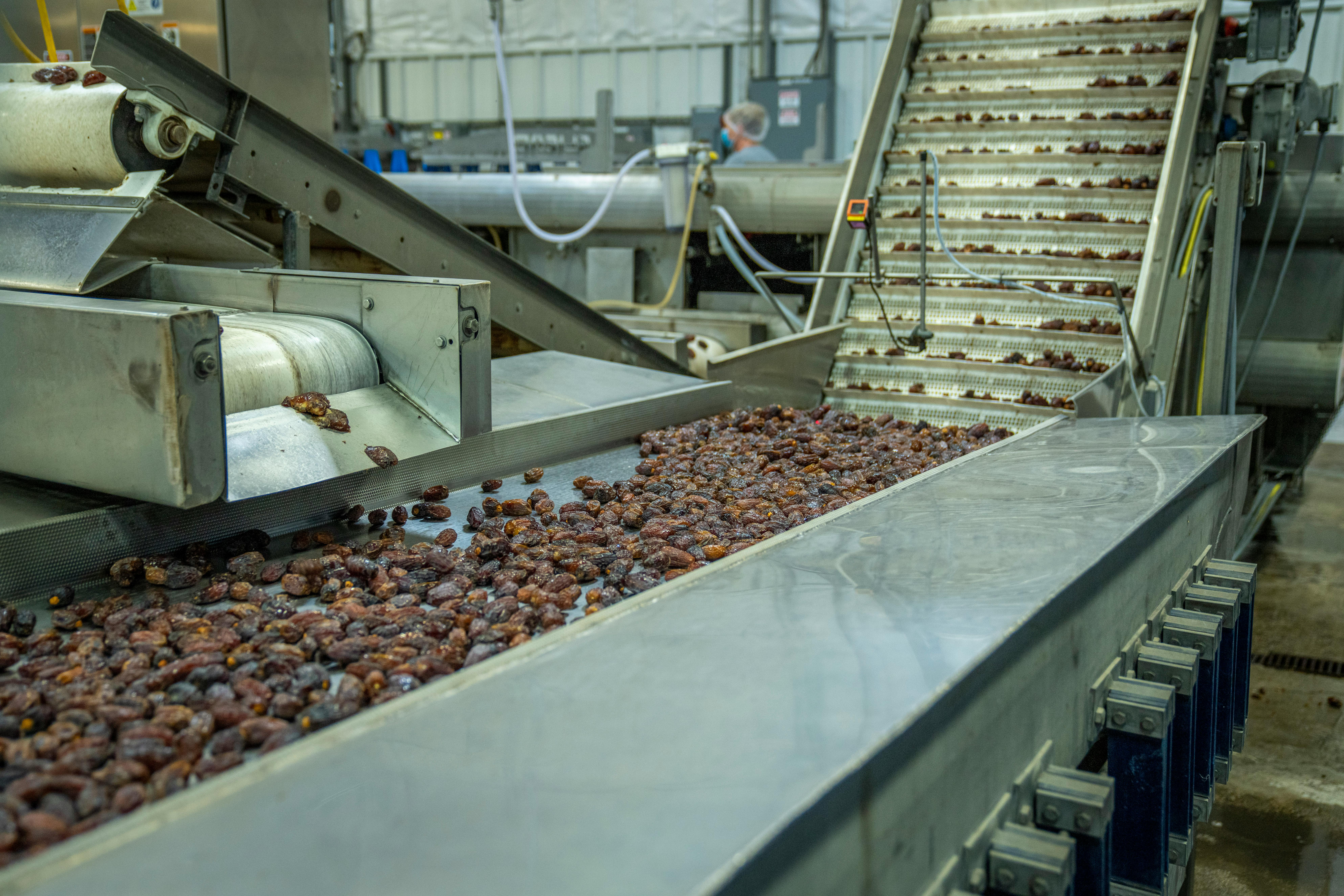
Beverage bottling and packaging line in a modern food production facility

Daxonet implements ERP, POS, MES, and loyalty systems for Malaysian food and beverage businesses across food manufacturers, beverage producers, central kitchens, restaurant chains, café chains, bakeries, and FMCG-grade snack producers. The stack: AutoCount Accounting + AutoCount POS + AutoCount OneRewards for SME and chain F&B; D365 Business Central or D365 Finance + SCM with process-mode for mid-large food manufacturers; ARC.LITE or ARC.OPS MES for production-floor operations; e-Invoice middleware for MyInvois B2B and B2C compliance. HALAL traceability, MeSTI documentation, shelf-life enforcement, and recipe-based portion costing are configured during go-live.

The Reality

Three problems every food and beverage business in Malaysia runs into.

If two of these match your business, the cost of inaction is likely larger than the cost of fixing them.

HALAL audit takes three days.

Auditor asks: "Trace this finished batch back to raw-material HALAL certificates." You spend two days pulling files, one day cross-checking. The certificate body notes the friction. Renewal becomes harder than it should be.

Expiry-driven waste eats your margin.

5-10% of inventory expires before sale. Outlets pick newer stock because it's at the front. Older stock dies in the back of the chiller. Nobody catches it until month-end COGS spikes.

You don't know your real per-portion cost.

Your menu price was set 18 months ago. Coconut milk is up 24%. Beef is up 15%. The dish you thought was 38% margin is now 21%. You'll find out after a quarter of selling at a loss.

The Stack

One stack — back office, production floor, and customer-facing counter.

F&B is hard because three operations have to be in sync. Daxonet integrates them so the data only gets entered once.

Back office

AutoCount Accounting for SMEs, D365 Business Central for chains and manufacturers. HALAL lot tracking, recipe BOM, weighted-average costing, MyInvois e-Invoice.

Where finance, inventory, and compliance live.

Central kitchen / production

ARC.LITE (free) or ARC.OPS for production tracking. Recipe-driven work orders, batch lot capture, FEFO inventory, MeSTI / GMP audit trail.

Where food gets made and quality gets proven.

Outlet & customer

AutoCount POS for multi-outlet checkout, OneRewards for member loyalty, real-time recipe-based stock deduction, daily P&L per outlet.

Where revenue is captured and customers come back.

Methodology · 4 phases

How does an F&B implementation actually run?

Recipes first. Counter second. Compliance third. The kitchen has to be the source of truth before anything downstream works.

  1. 01

    Recipe & SOP Capture

    Standardise every recipe. Lock portion sizes. Map central kitchen vs outlet prep. Foundation work — the rest depends on it.

  2. 02

    Back Office Live

    AutoCount or D365 BC go-live. HALAL lot tracking, FEFO, MyInvois. CFO sees real margin in 30 days.

  3. 03

    POS Rollout

    Outlet by outlet. AutoCount POS with recipe-based deduction. Daily flash reports per outlet. Loyalty programme launch.

  4. 04

    Optimise

    Waste tracking. Member analytics. Menu pricing reviews driven by real cost data. Optional MES layer for high-volume production.

Outcomes

What F&B businesses actually ship after Daxonet engages.

30-50%

Expiry waste reduction

FEFO picking + outlet expiry alerts often fund the entire ERP investment.

< 30 sec

HALAL audit response

Lot genealogy + certificate attachments produce one PDF on demand.

9 AM

Daily outlet P&L visibility

Versus end-of-month surprise. Underperforming outlets get fixed within the same week.

30-60%

Member spend uplift

OneRewards members spend more per visit, return more often, and feed product-mix intelligence.

Real-time

Recipe-driven costing

Menu pricing tracks ingredient volatility within a week — not a quarter behind.

8-14 wks

Multi-outlet go-live

For a 5-15 outlet chain on AutoCount POS + Accounting. Larger chains: 14-26 weeks.

FAQ

What do clients ask before commissioning this service?

We're a HALAL-certified beverage producer. What does ERP add to our certification?
Audit-time speed. JAKIM and customer auditors ask: 'Show me which raw-material lot went into batch BV-2024-0871, and prove every input was HALAL-certified at the time of production.' Without ERP, that's a three-day file dig. With ERP configured for HALAL, every raw-material lot has a HALAL certificate attachment with expiry, every production order locks input lots at the moment of issue, and the genealogy report comes out as one PDF in 30 seconds. Certification doesn't change — audit pain does.
We run 12 cafés. POS, accounting, and inventory don't talk to each other. Where do we start?
AutoCount POS + Accounting is the most common Daxonet F&B chain stack. POS at every outlet feeds central inventory and accounting in real time. Recipe-based stock deduction means selling a teh tarik automatically debits 30g of Boh, 200ml of evaporated milk, and 25g of sugar. Daily P&L per outlet is visible by 9am next morning, not at month-end. Add OneRewards for member loyalty when ready. Total go-live for a 12-outlet chain: 8-14 weeks.
Our central kitchen distributes to outlets and to other restaurants. How does that work?
Two business processes in one ERP. Internal transfers to your own outlets (no invoicing, just stock movement). External sales to other restaurants (full sales order with MyInvois e-Invoice). Same recipe, same production batch — different routing. We configure the central-kitchen entity with both flows, with consolidated reporting at the parent level so you see total food cost across the network.
What about food shelf-life? We waste a lot.
FEFO picking (first-expiry-first-out) is the foundational fix — outlets get the oldest stock first. Add expiry alerts at 7 days and 3 days before expiry. Add waste-tracking at outlet level so you can isolate which products waste most and adjust orders. Most F&B chains see 30-50% reduction in expiry-driven waste in the first 6 months. The savings often fund the entire ERP investment.
We're a snack producer selling to retailers. How does e-Invoice work for B2B?
Daxonet's e-Invoice middleware handles MyInvois submission directly from AutoCount or D365. For B2B retail (Aeon, 99 Speedmart, Lotus's, Mydin, Family Mart), credit notes and consolidated billing are common — we configure both flows. For self-billed (where the retailer issues the invoice on your behalf), the validation matches the retailer's expected format. Result: <2% rejection rate.
We're a bubble-tea chain expanding to 30 outlets. Can your stack scale?
Yes — AutoCount POS handles 100+ outlets with central management. The bigger question is operations discipline: standardised recipes, central kitchen vs in-outlet prep, supply chain to outlets, daily flash reports. We've helped chains scale from 5 to 50 outlets without re-platforming. The ERP is one piece; the operating model around it is the bigger lift.
What about loyalty programmes? My customers ask for it.
AutoCount OneRewards integrates with AutoCount POS at outlet checkout. Member sign-up, points accumulation, tier-based pricing, birthday rewards, and SMS / push campaigns. Members typically spend 30-60% more per visit than non-members. The loyalty data also feeds product mix decisions — what your top members actually buy.
Do I need MES for food production?
Depends on volume. Under 10,000 units/day, AutoCount with batch tracking is enough. Above that, or if you have IIoT-enabled mixers, fillers, and packaging lines, ARC.LITE adds real-time production monitoring and OEE — and ARC.LITE is free to start. Most Malaysian F&B manufacturers add MES in year 2 once volume justifies it.
Ready to start?

Book a 45-minute briefing with a Daxonet principal.

We review your current state, map a phased path to your target outcome, and tell you honestly whether we are the right partner — or who is.

Hi! What can I do for you?
DAX AI Assistant · Online now