LHDN e-Invoice Phase 4 is LIVE — All Malaysian businesses must comply. Check your compliance →
Industries · Manufacturing

Manufacturing in Malaysia: one stack — finance, factory floor, and AI — built for how you actually make things.

Daxonet is Malaysia's full-stack manufacturing systems partner. Microsoft Dynamics 365 for finance and supply chain. Arcstone ARC.OPS / ARC.LITE for the shop floor. AI machine vision and predictive maintenance on top of clean MES data. Whether you run discrete assembly in Penang, process plants in Pasir Gudang, electrical fabrication in Shah Alam, or structural steel in Pasir Mas — the same disciplined stack scales to your operation.

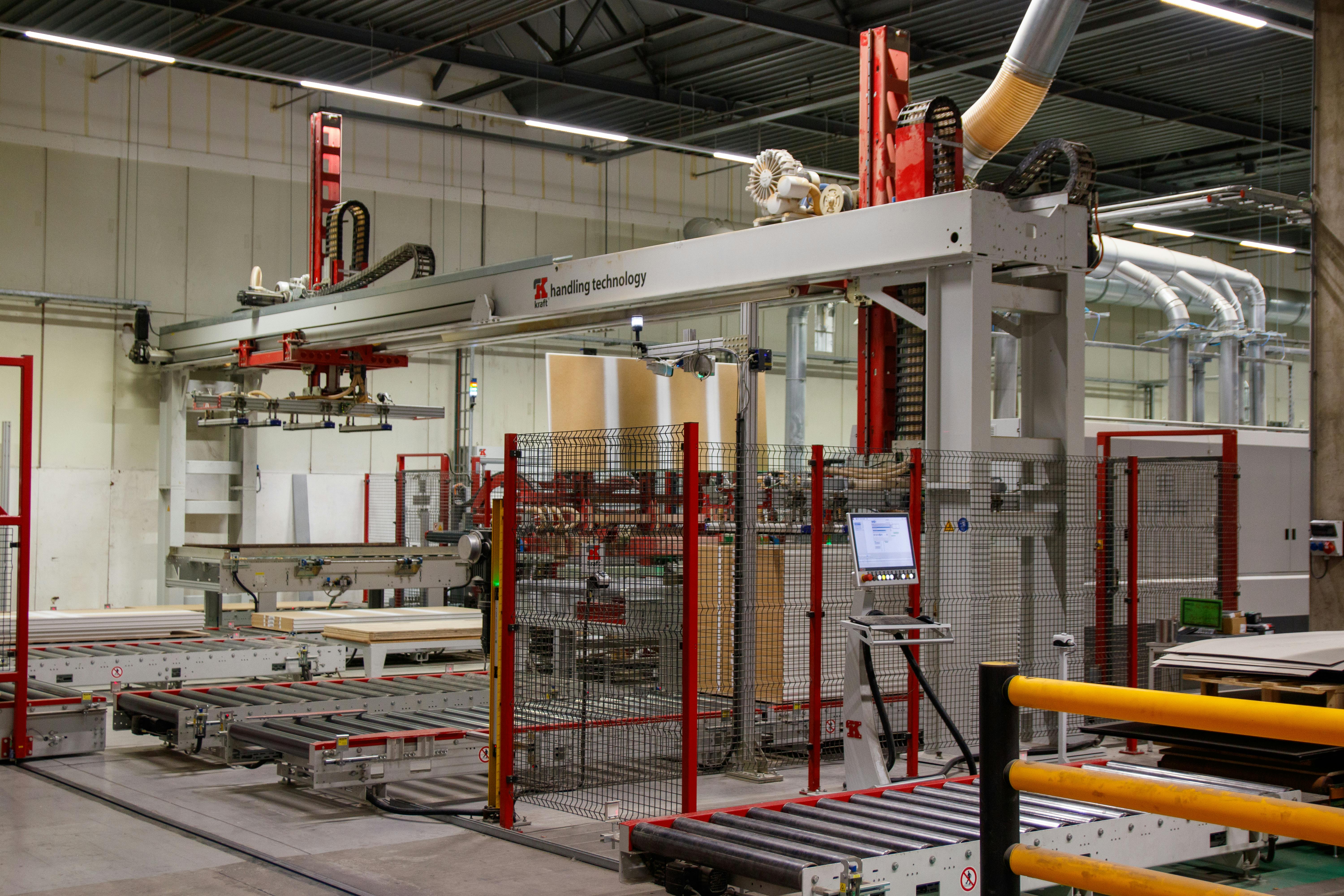
Modern manufacturing facility with automation

Daxonet is a Malaysian full-stack systems partner for manufacturers across discrete, process, assembly and repetitive, electrical and electronics, and steel-fabrication operations. The unified stack pairs Microsoft Dynamics 365 (Finance, SCM, Business Central, Project Operations) or AutoCount Accounting for SMEs with Arcstone ARC.OPS / ARC.LITE MES for shop-floor execution, plus AI machine vision and AI predictive maintenance for Industry 4.0. Manufacturers typically begin with ARC.LITE (free) on a pilot line plus AutoCount or D365 in finance, then scale to ARC.OPS, full ERP integration, and AI on top of 90 days of clean data. Engagements deliver 8-25% throughput / OEE gain, 30-60% defect-escape reduction, MNC-grade traceability, and Tier-1 / Tier-2 customer-audit readiness.

Sub-Industries

Five sub-industries. One disciplined stack.

Different operations, different physics, different KPIs. Same architecture, configured for the specifics of how you make things.

Universal Stack

What stays the same across every manufacturing engagement.

Three layers. Each layer is a known product with known integration patterns. Configuration is what makes it yours.

Layer 1 · Finance & Operations

Where the money lives.
  • Microsoft Dynamics 365 (Finance, SCM, BC, Project Ops)
  • AutoCount Accounting for SMEs
  • e-Invoice Middleware for MyInvois
  • Power BI / Fabric for analytics

Layer 2 · Shop-Floor Execution

Where the product is made.
  • Arcstone ARC.LITE — free entry
  • Arcstone ARC.OPS — flagship MES
  • IIoT gateway for machine data
  • Operator terminals + andon

Layer 3 · AI on Clean Data

Where the edge comes from.
  • AI Machine Vision (defect detection)
  • AI Predictive Maintenance
  • AI Powered WMS
  • Daxonet AI Frontier framework
Capabilities

Three things every Malaysian manufacturer asks Daxonet to fix.

The names of the products vary by sub-industry. The capabilities below are universal.

Manufacturing data dashboard with real-time metrics
01 · Single Source of Truth

Finance and the floor stop arguing about whose number is right.

MES captures shop-floor reality. ERP reflects it. Power BI reports it. The CFO and the plant manager finally see the same data — same definition, same number, same decisions.

  • ✓ MES → ERP integration during configuration
  • ✓ Daily exception reports — no end-of-month surprises
  • ✓ Audit trail from raw material to dispatched unit
02 · MNC Supply Chain Readiness

Tier-1 / Tier-2 audits answered in seconds, not days.

Bosch, Continental, Panasonic, Honda, Toyota, Petronas — every MNC customer has its own traceability format. Daxonet captures the data once and exports in any format. Your supplier scorecards stop being a quarterly headache.

  • ✓ Lot, serial, component, heat, batch — captured at source
  • ✓ Customer-format export templates configured during go-live
  • ✓ Audit response in <30 seconds, not 3 days
Quality inspection and traceability documentation
AI predictive maintenance dashboard for factory equipment
03 · Industry 4.0 Progression

A concrete ladder, not a marketing buzzword.

ARC.LITE → ARC.OPS → ERP integration → AI on top. Each rung produces value before the next is climbed. No big-bang transformations that fail at month 18.

  • ✓ Free entry path with ARC.LITE
  • ✓ Each rung self-contained — measurable ROI
  • ✓ AI deployed only after 90 days of clean data
Progression · 5 rungs

The Daxonet Industry 4.0 ladder.

You climb one rung at a time. Each rung produces real value before the next is climbed. Skipping rungs is the most common reason manufacturing transformations fail.

  1. 01

    Digital Work Orders

    ARC.LITE. Paper goes away. Operators on touchscreens. Basic OEE. Free entry.

  2. 02

    IIoT + Real-Time MES

    ARC.OPS. Machine data. Live OEE. Lot/serial genealogy. SPC.

  3. 03

    ERP Integration

    D365 / AutoCount + ARC.OPS connected. One source of truth.

  4. 04

    AI on Top

    Machine vision. Predictive maintenance. After 90 days clean data.

  5. 05

    Customer Integration

    EDI / portal feeds. MNC supplier scorecards improve.

Ready to climb the first rung?

A one-day plant walk. A fixed-fee proposal in 5 working days.

No slideware. Daxonet principals on your floor mapping the real workflow before naming a number.

Book Plant Walk-Through
Outcomes

What Malaysian manufacturers actually ship after Daxonet engages.

8-25%

OEE / throughput uplift

Range across sub-industries — discrete and assembly highest, process steady, steel project-by-project.

30-60%

Defect-escape reduction

AI Machine Vision on critical inspection stations. Customer-quality cost falls 1-2 quarters later.

7-14 days

Failure prediction lead

Predictive maintenance turns surprise breakdowns into planned weekend service.

< 4 hrs

Customer-audit response

From days digging through paper to a query in the system. MNC scorecards improve.

On request

To start with ARC.LITE

Free entry. Run paperless work orders on one line, prove the value, then expand.

9-15 mo

Typical full-stack ROI

Throughput gains alone usually pay back the entire ERP + MES + AI investment.

FAQ

What do clients ask before commissioning this service?

Daxonet covers 5 different manufacturing sub-industries. How is one team good at all of them?
Because the underlying stack is the same — D365 / AutoCount + ARC.OPS + AI — and what changes is configuration, not foundation. The discrete team configures cycle-time capture differently from the process team's batch-yield setup. The steel team uses project mode where the F&B team uses recipe mode. But the core architecture, integration patterns, AI deployment, and managed-services discipline are universal. We've shipped this stack for over a decade across all five sub-industries.
We're a small operation — under 50 staff. Is this for us?
Yes. AutoCount Accounting + ARC.LITE (free entry) + e-Invoice middleware is the SME path. Most Malaysian SME manufacturers start there. As you grow, you migrate AutoCount → D365 BC → D365 F&O, and ARC.LITE → ARC.OPS, on your timeline. The data and the workflow port cleanly.
We're an MNC subsidiary in Malaysia. Group standardised on SAP. Can you help?
Two patterns. First — if you're allowed to run a separate Malaysian instance, D365 with consolidation reporting up to SAP HQ via standard interfaces. Second — if you must use group SAP, we deploy ARC.OPS for shop-floor execution and integrate to SAP. Many Malaysian MNC subsidiaries run this combination because group SAP is too rigid for local shop-floor reality. Either way, the AI, MES discipline, and Malaysian compliance stays Daxonet's.
How long before AI starts producing value?
AI requires 60-90 days of clean MES data before useful models train. Trying to deploy AI without that foundation produces interesting-looking dashboards built on garbage data. The Daxonet sequence: MES first, ERP integration second, then AI in months 6-9. Vision models reach production accuracy in 4-8 weeks once data is flowing. Predictive maintenance models stabilise in 12-16 weeks. Most engagements see measurable AI ROI inside year 1.
What does this cost? Roughly.
Pricing is scoped to your size, modules and integrations. Daxonet quotes fixed-price after a short scoping call so there are no surprises. Most clients reach payback within the same project window.
How do you handle Industry 4.0 progression? We hear the term but it's vague.
Daxonet's Industry 4.0 ladder is concrete: (1) Digital work orders and basic OEE — ARC.LITE. (2) IIoT-connected machine data, real-time OEE, lot/serial genealogy — ARC.OPS. (3) ERP integration so finance and operations see the same numbers. (4) AI on top: machine vision, predictive maintenance. (5) Customer-grade traceability and supply-chain integration. Each rung produces value before the next is climbed. Skipping rungs is the most common reason 'Industry 4.0 transformations' fail.
Can we start before our finance system is ready?
Yes. Many manufacturers start with ARC.LITE on the shop floor while still running their existing finance system. The MES produces immediate operational value (paperless work orders, real-time OEE, traceability). When you're ready to upgrade finance — months or years later — we wire the MES into the new ERP. The two are decoupled by design.
Ready to start?

Book a 45-minute briefing with a Daxonet principal.

We review your current state, map a phased path to your target outcome, and tell you honestly whether we are the right partner — or who is.

Hi! What can I do for you?
DAX AI Assistant · Online now