LHDN e-Invoice Phase 4 is LIVE — All Malaysian businesses must comply. Check your compliance →
Industries · Discrete Manufacturing

Discrete Manufacturing in Malaysia: ERP + MES that survives the shop floor.

Electronics in Penang. Precision parts in Shah Alam. Automotive components in Senai. Medical devices in Bayan Lepas. Discrete manufacturers in Malaysia ship into MNC supply chains that demand real-time OEE, lot traceability, and ISO-grade audit trails. Daxonet builds the ERP + MES stack that delivers all three — not a slide deck, a working factory.

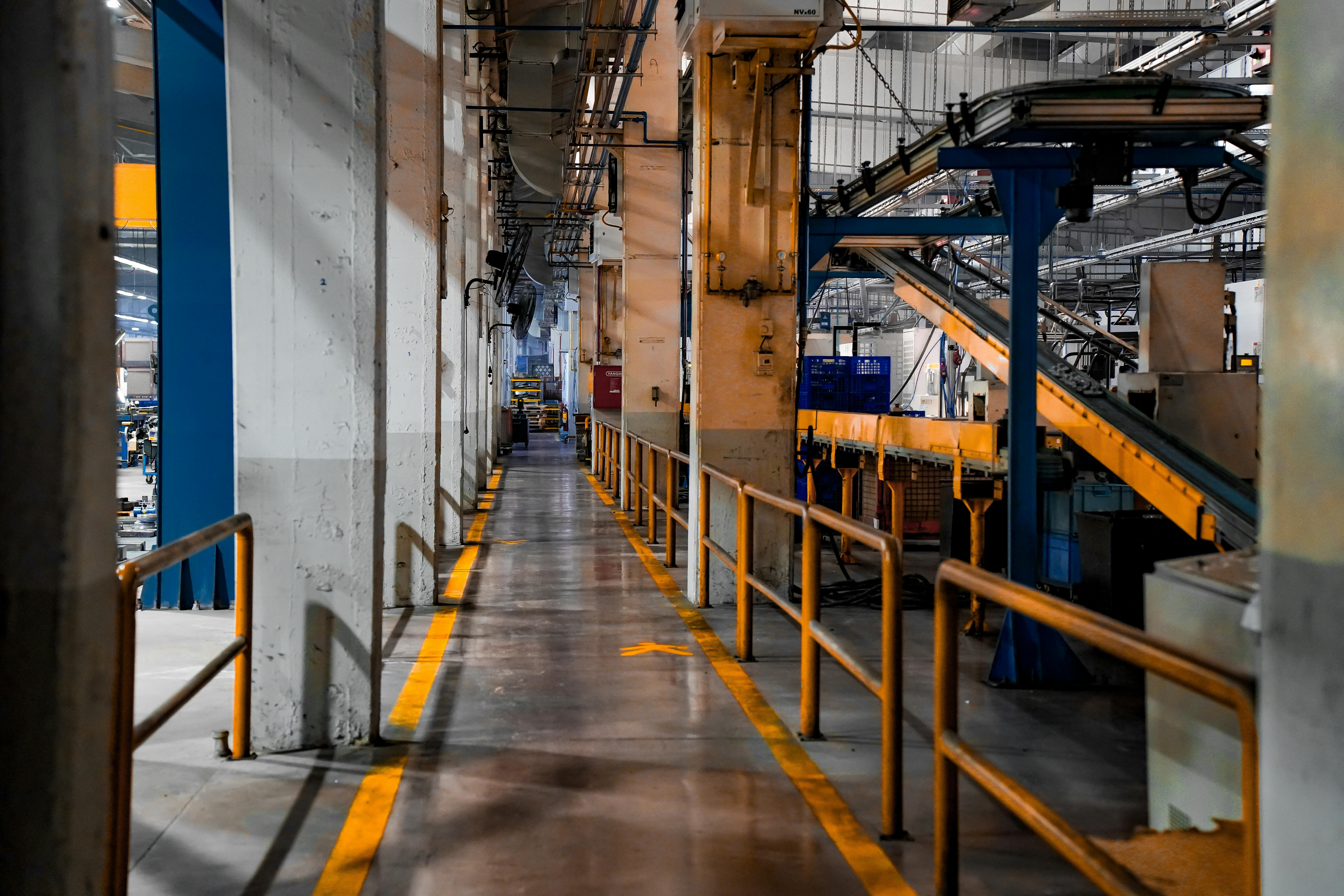
Discrete manufacturing assembly line with precision components

Daxonet delivers ERP and MES solutions to Malaysian discrete manufacturers — electronics, precision machined parts, automotive components, machinery, and medical devices. The stack combines Microsoft Dynamics 365 Finance & SCM (or AutoCount Accounting for SMEs) with Arcstone MES (ARC.LITE free entry, ARC.OPS flagship) for shop-floor execution. Typical engagements run 4-6 months for SME deployments, 6-12 months for full enterprise rollouts. Outcomes commonly achieved: 15-25% OEE gain, lot-level traceability for MNC audits, paperless work orders, machine downtime alerts, and Industry 4.0-ready data architecture for AI machine vision and predictive maintenance.

The Reality

Three problems every discrete manufacturer in Malaysia eventually runs into.

If two of these are already happening on your floor, the cost of inaction is bigger than the cost of fixing them.

Hidden downtime is eating your margin.

Operators tick a paper sheet "machine down: 30 min" — but actually it was 78 minutes across three micro-stops. By month-end, the gap is 8% of capacity. You cannot fix what you cannot see.

Your MNC customer wants traceability you don't have.

A Tier-1 audit asks: "Show me which raw-material lot went into batch QA-2024-0871." You spend three days digging through paper job tickets. The MNC notes it. Next supplier review, your scorecard drops.

Production data and finance data tell different stories.

D365 says you produced 12,400 units this month. The shop floor logbook says 11,820. Your CFO has stopped trusting the production report. Capacity decisions get made on gut feel, not data.

The Stack

What goes on your floor — and what goes in your back office.

Discrete manufacturing needs a shop-floor system AND a finance system. Daxonet builds both, integrated. You don't run two vendors arguing about whose API broke.

On the shop floor

  • ARC.LITE — free MES entry. Digital work orders, basic OEE, paperless handover. Live in 2-4 weeks.
  • ARC.OPS — flagship MES. Real-time OEE, lot/serial genealogy, SPC, IIoT machine integration, scheduling.
  • AI Machine Vision — line-side defect detection, 30-60% reduction in escape defects.
  • AI Predictive Maintenance — failure alerts 7-14 days early on critical machines.

In the back office

  • D365 Finance & SCM — for mid-large factories. Cost roll-up, MRP, multi-entity, multi-currency.
  • D365 Business Central — for growing SMEs. Lighter footprint, faster deployment.
  • AutoCount Accounting — for SME factories under RM 50M. Strong Malaysian compliance, low TCO.
  • e-Invoice Middleware — MyInvois submission with credit-note and self-billed handling.

Most discrete manufacturers in Malaysia start with ARC.LITE on one line + AutoCount in the office, then scale up as the data proves out the value.

Methodology · 4 phases

How does a discrete-manufacturing engagement actually run?

MES first. ERP integration second. AI third. Inverting that order is the most common reason factory transformations stall.

  1. 01

    Site Walk-Through

    One day on your floor. We map your routings, machines, current pain points. You get a fixed-fee proposal — no slideware.

  2. 02

    MES Pilot

    One line. ARC.LITE or ARC.OPS depending on scope. Operators on touchscreens. Real-time OEE on the floor display within 4-8 weeks.

  3. 03

    ERP Integration

    Wire MES output into D365, BC, or AutoCount. Production reports in finance now reflect the real shop floor — same data, same numbers.

  4. 04

    AI Layer

    Once 90 days of clean data is flowing, layer in machine vision or predictive maintenance. AI on stale data is fiction.

Outcomes

What discrete manufacturers actually ship after Daxonet engages.

15-25%

OEE gain in 6 months

Visible downtime + structured improvement = capacity you didn't know you had.

< 4 hrs

Audit response time

From days digging through paper to a query in ARC.OPS. MNC supplier scorecards improve within one quarter.

30-60%

Defect escape reduction

AI Machine Vision on the line catches what human inspectors miss in hour 4 of a shift.

7-14 days

Failure prediction lead

Predictive maintenance turns surprise breakdowns into planned weekend service.

One

Source of production truth

Finance, operations, and the floor stop arguing about whose number is right.

On request

To start with ARC.LITE

No upfront license. Run paperless work orders on one line, prove the value, then expand.

FAQ

What do clients ask before commissioning this service?

We're a Tier-2 supplier to a Japanese MNC. They keep asking for traceability data. Where do we start?
Start with ARC.LITE — Daxonet's free MES entry. Digital work orders replace paper, and every operation is timestamped against the work order. That alone covers most Tier-2 traceability requests. When the MNC asks for genealogy (which raw lot went into which finished lot), upgrade to ARC.OPS. Most factories make this jump in 3-6 months once they see the data flowing.
Our shop floor still runs on Excel and paper. Can we go straight to a full MES?
Yes, but it's not always wise. If your operators have never used a digital work order, jumping to ARC.OPS in one step usually means change-management failure. The ARC.LITE → ARC.OPS path lets operators learn the digital muscle on simpler workflows first. Total elapsed time is similar (6-9 months either way), but the success rate is higher with the staged approach.
We have D365 F&O for finance and a separate Excel-based production tracker. Can Daxonet integrate them?
Yes. ARC.OPS publishes work-order completion, scrap, and yield events directly into D365 SCM via standard connectors. Production reporting in D365 then reflects shop-floor reality, not yesterday's spreadsheet. Most integrations are live in 4-8 weeks once both systems are stable.
What does it cost to start?
Pricing is scoped to your size, modules and integrations. Daxonet quotes fixed-price after a short scoping call so there are no surprises. Most clients reach payback within the same project window.
Can the MES integrate with our machines? Some are 15 years old.
Almost always yes. Modern machines speak OPC UA or MQTT directly. Older PLCs (Siemens S7, Mitsubishi, Allen-Bradley) connect via the Arcstone IIoT gateway. For machines with no PLC at all, a simple cycle-counter sensor plus a cheap edge device gives you machine-state data within a week. We've connected presses from the 1990s and CNC mills from last year on the same network.
Where does AI fit in?
AI sits on top of the MES once data is flowing. Two highest-ROI use cases for discrete manufacturers: AI Machine Vision (defect detection on the line — typically 30-60% reduction in escape defects) and AI Predictive Maintenance (sensor data on critical machines, alerts 7-14 days before failure). Both require MES data first. Without MES, AI is guesswork on stale data.
How does this connect to e-Invoice?
Your AutoCount or D365 system handles e-Invoice submission to MyInvois — the MES does not touch e-Invoice. But MES data does feed inventory accuracy and cost-of-goods accuracy in your finance system, which makes your e-Invoice line items correct in the first place. Bad shop-floor data = bad invoices = LHDN rejections.
Ready to start?

Book a 45-minute briefing with a Daxonet principal.

We review your current state, map a phased path to your target outcome, and tell you honestly whether we are the right partner — or who is.

Hi! What can I do for you?
DAX AI Assistant · Online now