Three problems that quietly destroy throughput on Malaysian assembly lines.
Each one looks small in the moment. Compounded across 200 days a year, they're the difference between a line that pays back and one that doesn't.
Cycle creep is invisible until quarter-end.
Line target was 32 seconds. Reality drifted to 35. Nobody noticed because nobody measured station-by-station. Quarter-end output is 9% short. Sales blame production; production blame engineering.
Changeover takes 90 minutes when it should take 25.
Mixed-model lines lose hours to setup confusion — wrong fixtures, missed quality checks, components hunting. SMED principles exist on paper. The line still chases yesterday's BOM.
A defect ships and there's no way to recall the population.
A bad component lot got assembled into 8,400 units. You have 200 in the warehouse, 8,200 in the field. Without serial-level genealogy you recall everything. The customer-quality cost dwarfs the original defect.
What runs the line, what runs the office, and what watches the quality.
Repetitive manufacturing is a coordinated stack — not a single product. The integration is the value.
On the line
- ARC.OPS MES — sub-second cycle-time capture per station, real-time takt monitoring, andon, line-balancing dashboards.
- Operator terminals — touchscreens at every station, work-order pull, defect capture, quality gates.
- AI Machine Vision — inline defect detection on critical stations. Replaces human inspector drift.
- PLC / IIoT integration — OPC UA for modern, gateway for legacy. Real machine data, not operator self-reporting.
In the back office
- D365 Finance + SCM — for mid-large operations with multi-entity / multi-currency MNC complexity.
- D365 Business Central — for growing assemblers, faster deployment, lower TCO.
- AutoCount Accounting — for SMEs under RM 50M revenue. Strong Malaysian compliance.
- e-Invoice Middleware — MyInvois compliance for B2B sales to MNCs.
Repetitive operations almost always need a real MES. The shop-floor data resolution discrete ERP can capture is too coarse for takt-time decision making.
Technologies we deploy on assembly lines
Three capabilities that move the needle on a Malaysian assembly floor.
The compound effect of all three is what produces real throughput. Any one of them, alone, is a useful improvement. All three is a transformation.
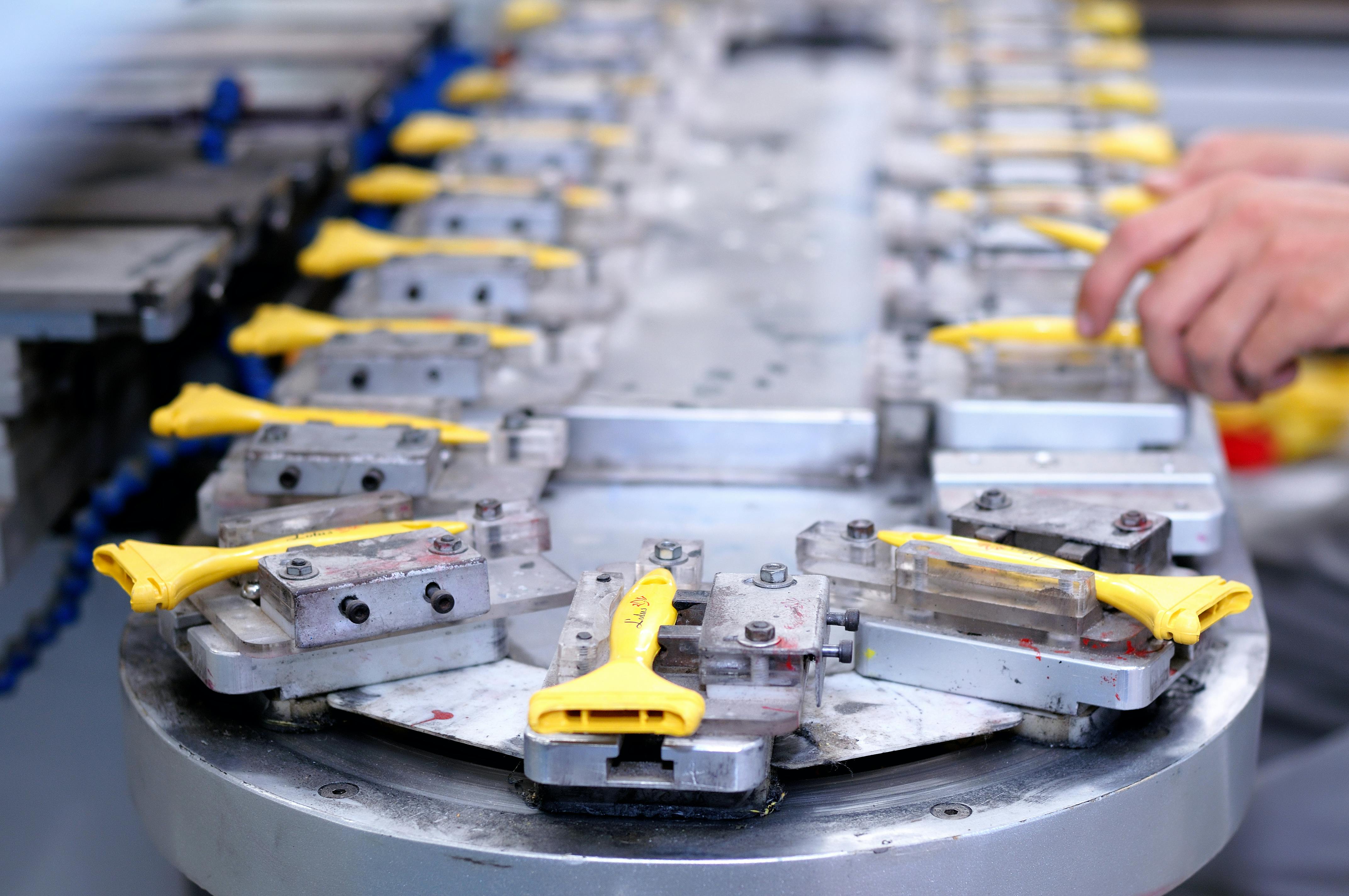
Real-time takt monitoring at every station.
ARC.OPS captures cycle time at every station to sub-second resolution. Floor displays show live takt versus target. The bottleneck stops being a debate.
- Sub-second cycle capture per station
- Andon alerts on the first violation
- Daily / weekly takt drift trending
Mixed-model changeover, recipe-driven.
Operator scans the next work order. ARC.OPS pushes the right BOM, fixture settings, quality checks, and torque values. SMED on autopilot.
- Variant-specific tooling guidance
- Quality gates per variant
- Changeover time visible per shift
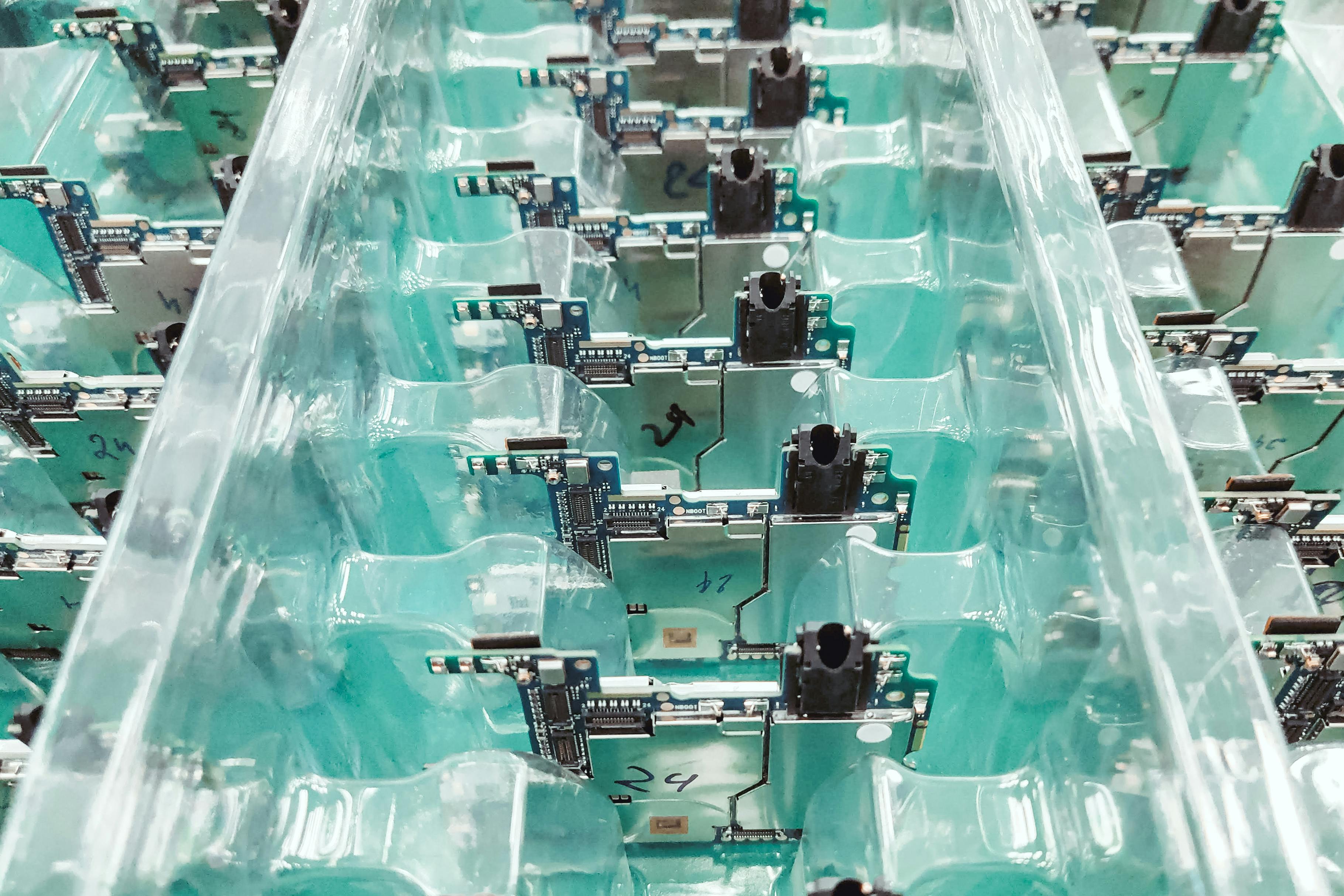

Component-to-serial genealogy.
Reel scans at SMT. Manual scans at hand-place. Test data at ICT/AOI. The complete vertical record from raw to dispatch — and back, when the recall request arrives.
- Component lot → finished serial linking
- Customer-format report export (PPAP, IPC-1782)
- Surgical recall scope, not blanket
How does an assembly-line engagement actually run?
Pilot line first. Roll-out second. ERP integration third. AI fourth. Skipping the pilot phase is the most common reason multi-line MES rollouts fail.
- 01
Line Walk & Pilot Plan
One day on the floor. Pick the highest-pain pilot line. Map stations, PLCs, operator flows. Fixed-fee proposal in 5 working days.
- 02
Pilot Go-Live
ARC.OPS on one line, 4-8 weeks. Real-time takt, andon, defect tracking. Operators trained. Floor display showing live OEE.
- 03
Roll-Out + ERP
Remaining lines: 1-2 weeks each. Wire ARC.OPS into D365 / BC / AutoCount. Production reports in finance match the floor.
- 04
AI & Optimisation
Once 90 days of clean MES data is flowing, layer in AI Machine Vision and Predictive Maintenance on bottleneck equipment.
Three capabilities. Three operator views. All configured during go-live.
What real-time takt looks like on the floor — and what it changes about how the line is run, hour by hour.
Every station, every cycle, every shift.
ARC.OPS captures cycle time at every operator station. Drift is visible the same hour it appears, not at month-end. The line lead acts on data, not on yelling.
- ✓ Sub-second cycle resolution per station
- ✓ Live andon — green / yellow / red on a floor display
- ✓ Auto-flagged stations exceeding takt for 3+ cycles
Mixed-model lines, no fixture hunting.
Operator scans the next work order. ARC.OPS pushes the right BOM, fixture list, torque settings, and quality checks for that variant. SMED principles become automatic, not aspirational.
- ✓ Variant-specific BOM and tooling on operator screen
- ✓ Quality-gate auto-config per variant
- ✓ 30-50% changeover time reduction in mixed-model
Defect detection that doesn't drift in hour 7.
AI Machine Vision on critical inspection stations. Catches what human inspectors miss late shift. Defect-escape reduction lands in 1-2 quarters.
- ✓ Component presence, polarity, label orientation
- ✓ Solder-joint inspection on PCB stations
- ✓ Trained on your defect library, not a generic model
A one-day floor walk. A fixed-fee proposal in 5 working days.
No slideware. Daxonet principals on your floor mapping the real workflow before naming a number.
Book Site Walk-ThroughWhat assembly operations actually ship after Daxonet engages.
Throughput uplift
Line-balancing decisions made on data, not gut feel. Capacity gain without extra labour.
Changeover time cut
Recipe-driven setup ends fixture hunting and quality-check confusion.
Defect escape reduction
AI Machine Vision on critical stations. Customer-quality cost falls a quarter or two later.
Recall scope
Serial-level genealogy turns "recall everything" into "recall the affected 240 units".
Typical ROI horizon
Throughput gain alone usually pays back the entire MES + ERP investment.
Multi-line go-live
Pilot in 4-8 weeks. Roll-out 1-2 weeks per additional line. ERP integration parallel.